Passager Editor Rosanne Singer
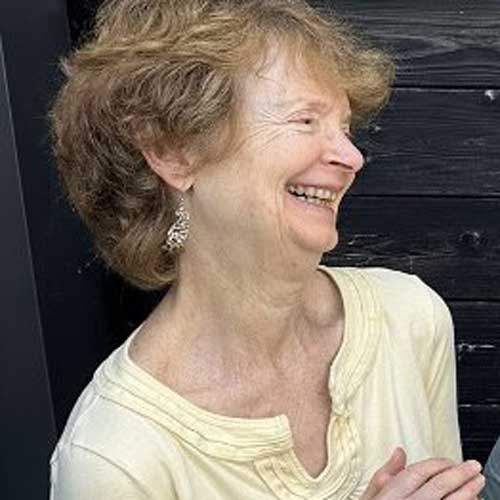
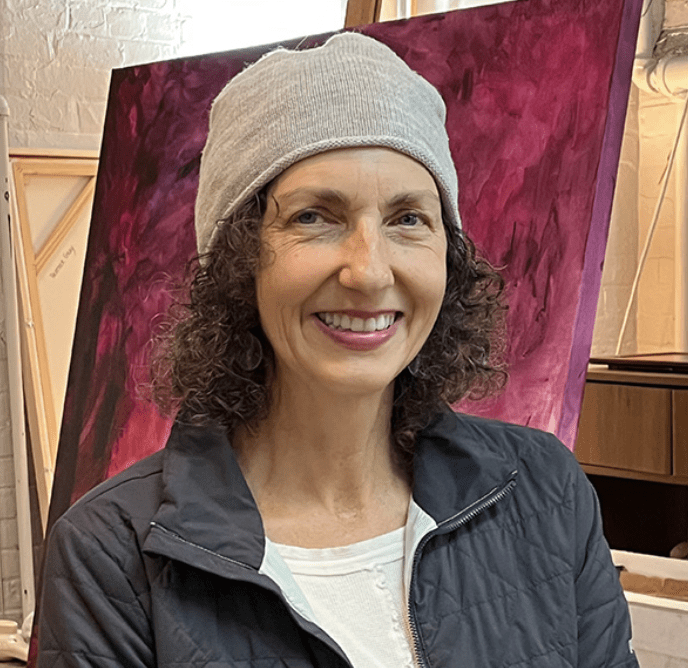
A conversation with Passager’s editor in chief, Rosanne Singer. Plus, an excerpt by Sara Winslow.
TRANSCRIPT
Rosanne Singer has just completed her first year as Passager’s editor in chief. On this episode of Burning Bright, we’ll get to know Rosanne a little bit.
A Baltimore native, Rosanne had been in living in California for several years when, in 2019, some friends talked her into returning to Baltimore and entering the University of Baltimore’s MFA program in Creative Writing & Publishing Arts. When she enrolled, she received a fellowship from the university to work at Passager.
ROSANNE: And Christine was training me to be, I guess, at that point an editorial assistant. So it was for me sort of out of the blue, and at the time I just didn’t know because you can never know what something turns out to be. But that was the beginning.
Rosanne wasn’t new to writing and poetry; she’d been doing it much of her life.
ROSANNE: My mother very strongly encouraged me to be a writer. And she herself had gotten a master’s in the writing program at Johns Hopkins before men and women could be, you know, in the same school; she went to night school, But I think some of the writers she met made a huge impression on her, like Elliot Coleman. And she herself wrote, wrote poetry. And so there was that pushing me. I don’t mean she made me become a poet, but she really encouraged that part. And so, yeah, in my late teens is when I started really writing and publishing work.
So she wasn’t new to writing. And she wasn’t new to working in the field of writing and literature. In the early 1990s, Rosanne received a State Arts Council grant to be a poet in the schools.
ROSANNE: I think it was February of 1991, I started working at an elementary school that actually was walking distance from our home at the time, and that continued to grow. And, you know, I traveled in Prince George’s County and Montgomery County and every once in a while a little farther afield. And I stuck with it. For 26 years. And I really cared about it a lot. I mean, of course, the best part was the work. The worst part was the traveling on all the different state highways and making sure you got places on time. But I still think about the kids, and that was really very satisfying and sometimes very surprising, you know, but kids, you know, there could be third graders. And what they were able to express was very moving.
But back to Passager. Rosanne said that a couple things have surprised her. First, about the job…
ROSANNE: Well, one thing that surprised me, but shouldn’t have surprised me is that I had to be the last word or the final word in ways I hadn’t been. When Kendra was there, I could always send something to her and, she could take a look, and she could give the final judgment on something. But to not have that person and to have that person be me was a big adjustment. I thought, who do I look to? Who can I ask? And also, as you know, when I started, Christine had just had her baby, and so I certainly didn’t want to bother her more than absolutely necessary. So that surprised me again. And as I said, shouldn’t have. What didn’t surprise me was feeling an even stronger connection with the community and the writers, all the people that we reach out to. That’s been an added emotional connection and a strength.
That’s some of what surprised Rosanne about the job. But some of what surprised her was about herself.
ROSANNE: Well, I was thinking in the last couple days that I’ve never had a job that calls on a range of—I don’t want to call them talents, but maybe skills or interests of mine. When I was a poet in the schools that was one thing, and I enjoyed the teaching and the relating to the kids. There’s something about the work at Passager that is teamwork, something I never ever had before. And thinking about writing in a different way. It’s bringing out parts of me that maybe I haven’t had to use. I’ve needed to just trust my judgment and what I was saying before about, you know, I can’t turn to someone else and say, “what do you think?” And to me, all of that is a growing experience.
Now that she’s settling into the job, Rosanne’s thinking about how to make Passager even better.
ROSANNE: You know one thing that is often on my mind is inviting writers who are just over 50, making them feel very welcome. Because I feel like that keeps bringing, you know, fresh ideas, fresh styles. It’s not that oh, someone is 55, therefore I have a preference for what they do. But when I see that someone is maybe just of Passager age, if it’s something good, I’m really happy because I feel like that enlarges the community, that Passager is aware of writing changing and styles changing. and we’re not dismissing that or avoiding that. We’re welcoming it because things change. It isn’t that I’m opposed to tradition, but I feel like Passager wants to be a voice, a contemporary voice.
Rosanne said she loves and admires so many of the pieces that Passager receives and publishes. I asked her to pick one piece of the hundreds of submissions she’s read that stuck with her.
ROSANNE: Sara Winslow wrote her memoir “When Your Mom” in the second person. That creates an intimacy and immediacy that makes you feel as though this is your mother, your mother’s life. Here is a brief excerpt:
When your mom falls in her bathroom and lands in the hospital, you can fly to New York, move into your childhood home, get your brother to do the same. You can plan to stay for a couple weeks, until you find her a better living situation. She wouldn’t listen all those times you begged her to move out of the big house, all those times you told her to wear the medical alert button. You’re angry.
When your mom is scanned for broken bones, when they find instead a tumor in her colon, metastases in her lungs, you can stop searching for assisted living and start looking at in-home hospice. You can cancel your return flight. Your anger can fade into sorrow.
When your mom comes home, to a hospital bed in the den… You can learn to feed her water from a syringe, place the tiniest of ice chips in her dry mouth. To hover your ear on top of her lips so you can try to make out what she’s trying to whisper. You can sit with her and hold her hand. Stroke her arm. Tell her stories from your childhood. Sing her the same lullaby she once used to sing you.
You can wonder if anyone has ever loved their mother this much. You can be puzzled when people ask when are you going back to California, when are you going to resume your life. Because being here with her, this is your life. Your sorrow can fade into love.”
Excerpts from “When Your Mom” by Sara Winslow from Passager’s Winter 2025 issue.
On this episode of Burning Bright, we’ve been visiting with Passager’s editor-in-chief Rosanne Singer.
To subscribe to, donate to, or learn more about Passager and its commitment to older writers, visit passagerbooks.com. Passager offers a 25% discount on the books and journal issues featured here on Burning Bright. Visit our website to see what’s on sale this week.
Special thanks to Sarah Rubin who stepped in this summer to help us out with a lot of things.
For Christine, Rosanne, Mary, and the rest of the Passager staff, I’m Jon Shorr.
ROSANNE: I appreciate this job more and more with time.