Play Ball!
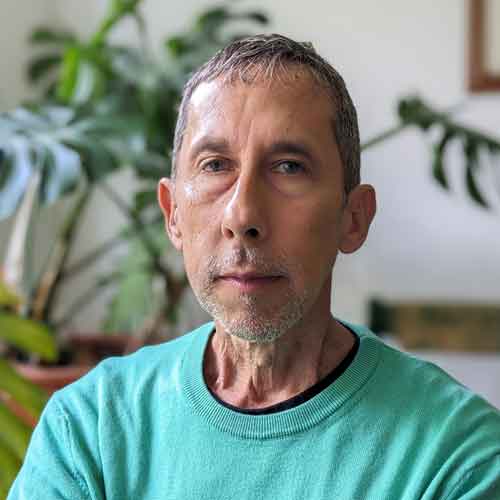
Celebrating the start of baseball season with work from Bea Epstein, Barry Nemett, John Kimmey, and Jennifer Wallace.
TRANSCRIPT
Some people celebrate spring March 21st, the Vernal Equinox. Others, on St. Joseph’s Day, March 19, when the swallows return to Capistrano. Others, when they see that first robin. And others, like me, when Major League Baseball returns. And that happened a few weeks ago. On this episode of Burning Bright, some pieces about baseball.
Baseball was historically an American sport. And if you weren’t from here, maybe you couldn’t understand what all the excitement was about. Here’s an excerpt from Bea Epstein’s memoir “Striking Out.”
Momma and Dad grew up in tiny impoverished villages in the Russian and Polish countryside where religious persecution was an everyday fact of life, and where Jewish children were denied access to public schools. They fled with their families to America, arriving penniless and terrified at Ellis Island. As young adolescents, they left school and went to work to help support their families. Driven by fear of economic disaster, their lives were shaped by hard work, the safest path to a secure future.
To Momma and Dad, the frenzy over the Brooklyn Dodgers was incomprehensible, a colossal waste of time. “Can you believe this excitement? Such foolishness. Grown men yelling about hitting a ball and running around,” Momma said. “Don’t they have anything better to do?”
An excerpt from Bea Epstein’s memoir “Striking Out.” Passager published it in its Winter 2013 issue.
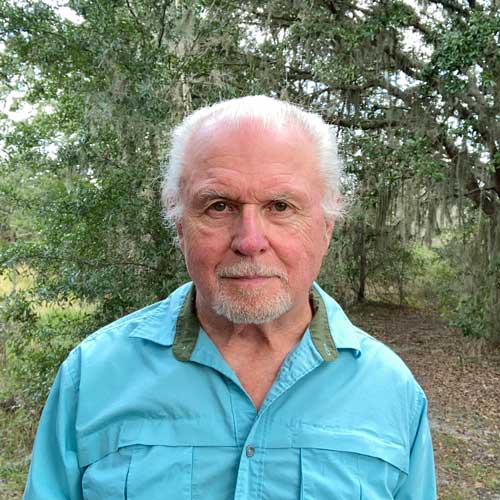
Barry Nemett said a trip to Vietnam inspired his story “This Time, Forever.” Here’s a short excerpt.
“Peoples call me Chip because of my small.” Vũ Chuỳ Dường wrote her name for the old man: C-h-i-p. When he placed it in his XXXL shirt pocket, her nickname was as undersized as her tiny palm in his when they shook hands.
A hefty, seventy-year-old oak of a man in a miniature forest, Charles cast long shade, while the dwarfed bonsai trees’ lights and darks kept to themselves. Hot in the day’s mugginess, the teen shadowed him to keep cool.
The old man was about Chip’s age when he was last in Vietnam. That was 1968. At the time, he was crazy into baseball. Gave Charlie his mojo. Power hitter, terrific fielder, great arm. He ended his last high school game with a diving, over-the-shoulder stab in centerfield. Giants scout Wes Westrun cheered from the stands. Earlie, at bat, Charlie had gone two for three. Both the blasts were the longest homers Westrun ever saw hit by a high schooler . . . well, by anyone but a major leaguer. Westrun had played in the majors alongside the great Willie Mays, Charlie’s idol. When the scout told him that Mays had said all he ever wanted to do was play baseball, forever. Charlie lit up. It was the “forever” part that got him. Based on a lifetime of playing, managing, coaching, and scouting, Mr. Westrun thought Charlie’d have a shot at making it to “the bigs,” as long as race didn’t get in the way. “All’s you need is thick skin, kid; you’ve already got the talent. Ignore ignorance,” Westrun advised. He got the Giants’ giant a contract with one of its minor league teams just before the sinewy Charlie got drafted, got sent overseas, got thrown an explosive curveball, and never got to play baseball again.
From Passager Issue 78, an excerpt from Barry Nemett’s story “This Time, Forever.”
John Kimmey said that Hemingway’s story “Indian Camp” inspired his memoir “The Last Sentence” that Passager published in its Winter 2017 issue. He said he wrote it because “having two sons I was interested in the relationship between fathers and sons.” Here’s an excerpt.
When I think of my role as a son and a father, I think of Hemingway’s short story about a doctor taking his son Nick to an Indian camp to show him how a baby is born.
The only thing my father, owner of the T.L. De Freest bakery in Albany, New York, ever took me to was a World Series game between the Giants and the Yankees in l936. And he didn’t know as much about the teams as I did, that the Giants’ pitcher, Carl Hubble, threw a screwball, and that Mel Ott, the Giants’ right fielder, was a homerun hitter, Joe DiMaggio on the Yankees was taking Babe Ruth’s place in the outfield after the slugger was traded to the Boston Red Sox. All he really cared about it seemed was running the bakery and compiling a stamp collection.
An excerpt from John Kimmey’s memoir “The Last Sentence.”
Interesting that all three of those pieces were about New York teams…
Matsuo Basho was a 17th Century Japanese poet most famous for his haiku. We’ll end this baseball edition of Burning Bright a bit more poetically, with Jennifer Wallace’s “Basho at the Plate.”
In the frame made
by the catcher’s butt
and the umpire’s knee,
an April pear tree blooms white
against the green, green field.
“Basho at the Plate,” Jennifer Wallace from her book The Want Fire. A different version of Basho at the Plate, maybe better referred to as a bash from the plate, happened May 8, 1966 at Baltimore’s Memorial Stadium. That’s the day Frank Robinson, newly traded to the Orioles from the Cincinnati Reds, hit a home run out of the park and into the parking lot.
To buy Jennifer Wallace’s book The Want Fire or to subscribe to, donate to, or learn more about Passager and its commitment to older writers, visit passagerbooks.com.
Passager offers a 25% discount on the books and journal issues featured here on Burning Bright. Visit our website to see what’s on sale this week.
For Christine, Rosanne, Mary, Asher, and the rest of the Passager staff, I’m Jon Shorr.
Due to the limitations of online publishing, poems may not appear in their original formatting.