New Technologies
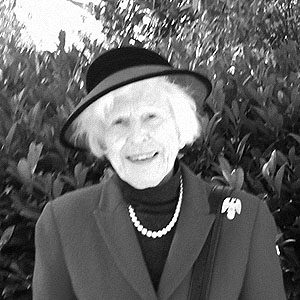

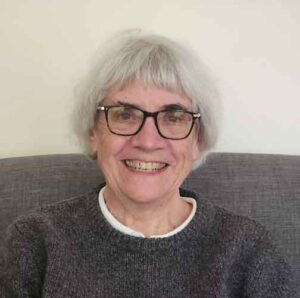
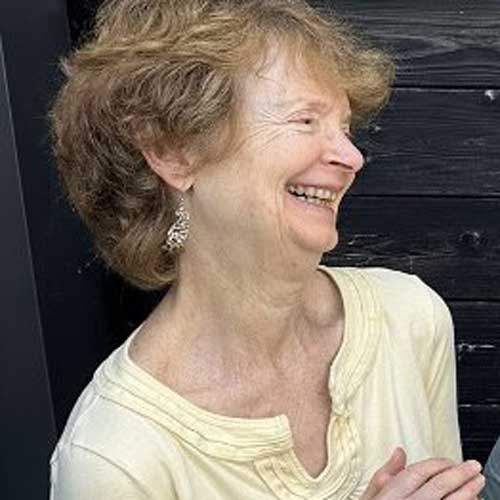
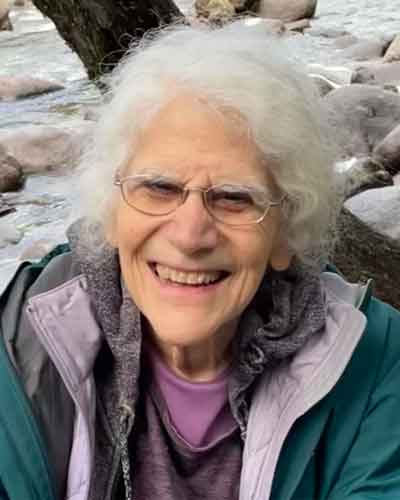
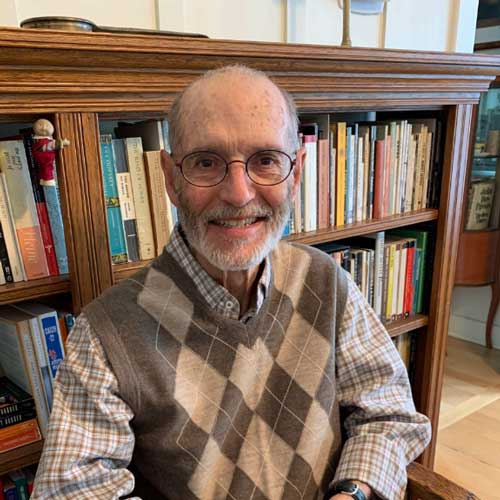
A thoughtful meditation on sliced bread, featuring poems by Lynn Wood Dizard, Madelyn Garner, and Patricia Bollin.
TRANSCRIPT
Here’s a date that probably didn’t pop up in your high school American History textbook: July 7, 1928—the day that sliced bread was sold for the first time. A guy named Otto Frederick Rohwedder came up with the design for a bread slicing machine somewhere around 1917, but it took another eleven years before he convinced a baker to give it a try, that pre-slicing wouldn’t make the bread get stale right away. The ad that announced it said, “The Greatest Forward Step in the Baking Industry Since Bread was Wrapped.” And that ad led to the saying that expresses revolutionary new ideas—the greatest thing since sliced bread.
I was thinking that to honor the anniversary of sliced bread, I’d find pieces that Passager’s published about the marvels of new technologies. But what I found even more of was something different but not unexpected—that older people not only are often reluctant to adapt new technologies, but we’re often suspicious of them, also, because they inherently cause life as we know it to change.
TV remote controls, cordless phones and then cellphones, satellite TV and audio… These are great innovations and conveniences. But there’s another side. Here’s Lynn Wood Dizard’s poem “Wireless World” from Passager’s 2016 Poetry Contest issue.
Press the remote and the day begins
with traffic and weather and news of the day.
Talking heads talk of losses and wins.
Syrians surge and candidates have their say.
Everyone everywhere is somehow connected
with traffic and weather and news of the day.
Babies are born and taxes, collected.
Chatterers chatter and recharge their phones.
Everyone everywhere is somehow connected.
No more attached than anonymous drones,
sinless and guilt-free, untouched by caresses,
chatterers chatter and recharge their phones.
At the end of the day, what can impress us
in a wireless world, free of passion and pain,
sinless and guilt-free, untouched by caresses?
Only more and more, our constant refrain,
in a wireless world, free of passion and pain.
Press the remote and the day begins.
Talking heads talk of losses and wins.
Lynn Wood Dizard’s “Wireless World.”
That poem, by the way, was a terzanelle, which is a poetic form that’s 19 lines long and has a specific line and rhyme pattern.
One of the greatest technological advances of the 20th Century was atomic energy. And one of the greatest inventions since sliced bread was the atomic bomb. And that led to Hiroshima and Nagasaki and dealing with Iran’s nuclear capabilities today. Here’s Madelyn Garner’s poem “Summer of Hiroshima.”
August. Hours sleeping under fever’s quilt, waking to
a steam-filled room, scent of Vicks and the evening report –
broadcasters speaking of Dark Gods who had detonated “Little Boy” –
so many burnt bodies. Bones bonded to stone. Roiling rubble.
I heard a lone crow cawing in what I thought was sorrow, but
I felt safe in Gram’s rocking chair although I was almost
too old to be cradled by her. So slow her touching, while
together we dreamt of the vertical cliffs and beaches of Point Loma,
a place to gather up the ocean into our skin, watch clouds rear up
like horses against un-rationed blue. We would never
make it there. For now, I listened to the beat of our synchronized
hearts as my head shifted on Gram’s breasts hypnotized by
the pendulum sway of her ruby earrings. The unexpected spider bite
ripening on her wrist like a cherry. Here in the room’s roseate glow
where dying roses in a vase rimmed in crimson spilled petals
over the floor. Here, where I would store ghosts in the mind’s pocket,
to which I later would add Three Mile Island. Chernobyl.
Fukushima. In the time between then and now and whatever will be
I have never forgotten her Philco Radio, shadowy
messenger from the past, its radium dial – an unblinking eye.
From Passager’s 2024 Poetry Contest issue, “Summer of Hiroshima” by Madelyn Garner.
Another technology, another of the greatest things since sliced bread, became popular in the early 2000s—texting. Here’s Patricia Bollin’s poem “Single-Item Shopping List.”
Do you need anything? my visiting son asks
as he starts to leave on his Portland search
for old vinyl and some message-bearing t-shirt.
What I need is for him to stay right there in that chair,
working, plugged into the remote job that demands his brain.
Of course I know what he’s asking. He’s thinking milk or olive oil.
I’m thinking: Don’t leave yet. Look, your lips still freckled
with donut crumbs – finish the rest of your black coffee.
But I answer, “No thanks. I’ve got what I need right now.”
He drives away in my car for a couple of hours then texts:
I can pick up anything you might need on my way back.
Just come home. I can eat that box of 3-year-old raisins,
shake out bread chunks from the toaster bottom, pile on
the remains of purple jelly. Food is not what’s missing here.
But instead text: Can you find one of “you” at Fred’s Grocery?
Ha Ha, he replies with that emoji button.
I won’t hit the tiny hearts emoji in reply. I know those hearts,
they match the red maple leaves his shoes walked into the hall,
the ones that will still be there when he flies back to LA.
Patricia Bollin’s “Single-Item Shopping List” from Passager’s Winter 2025 issue.
To subscribe to, donate to, or learn more about Passager and its commitment to older writers, visit passagerbooks.com. Passager offers a 25% discount on the books and journal issues featured here on Burning Bright. Visit our website to see what’s on sale this week.
I hope your week turns out to be the greatest thing since sliced bread.
For Christine, Rosanne, Mary, Sarah, and the rest of the Passager staff, I’m Jon Shorr.
Due to the limitations of online publishing, poems may not appear in their original formatting.