Semiquincentennial

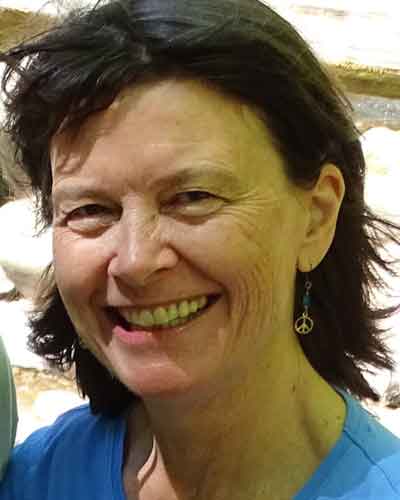
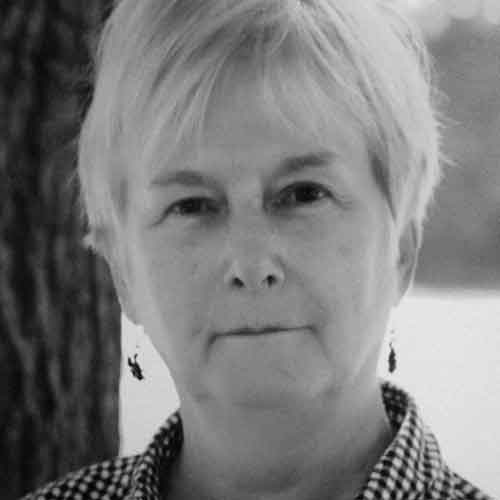
Celebrating America’s 250th birthday, featuring work by Dan Shiffman, Will Reger, Keli Osborn and Anne Sheldon.
9 minutes
TRANSCRIPT
We’re celebrating America’s 250th birthday this week, our Semiquincentennial. For those of you who’ve forgotten your Latin, centennial—100th anniversary; quincentennial—500th anniversary; and semi—half. So our Semiquincentennial, halfway to our 500th. Aren’t we the optimists!
On this week’s edition of Burning Bright, a few pieces that reflect on what it took to get here.
First, an excerpt from Dan Shiffman’s story “‘Americans All’ Week” about the hard lives that immigrants are willing to endure in order for their children’s lives to be better.
[My mother] grew up in a Bessarabian shtetl where a boy stuffed with learning was valued more than even the wealthiest girl, where old men debated if women had souls. In Brooklyn, my mother lived close enough to a public high school to hear the students calling to each other as they ran up the steps through the entrance and into classrooms that she would never see. My grandparents had promised my mother that she could enroll in an American school once they were more settled, but formal education would always remain out of reach for her . . . My grandparents required my mother’s help at home, where she slept on a cot in the kitchen. My mother’s family did piece work for a hair net business, and she spent thousands of her childhood hours knotting thread. She hated it.
My mother’s passion for literature made my memorization routines and grade calculations seem no more consequential than digging the prize out from the bottom of a Cracker Jacks box. I was determined to get ahead, even if my vision of what this meant was only partially filled in, mostly from imaginings based on New York Times wedding announcements I read when helping my father at his newsstand near Coney Island. I would never have admitted to my friends that I read wedding announcements, but these young couples who had gone to Ivy League colleges and who had fathers with thriving practices and prestigious firms seemed so full of hope and promise. I wanted to be like them, whoever they were exactly . . .
Unlike my parents, I wouldn’t need to cross the ocean in order to make a better life for myself. After graduating from Princeton and then some equally renowned medical school, I’d join a well-established and respected practice. I’d work long, grueling hours but would never forget that my patients were suffering, frightened people who needed both my reassurance and compassionate truth-telling.
From Passager’s Winter 2025 issue, an excerpt from “‘Americans All’ Week” by Dan Shiffman.
Sometimes, we talk about the United States as a melting pot; other times, a patchwork quilt of all of the cultures and religions and languages and more that have made our country. Here’s Will Reger’s poem “Immigration Song.”
They’ve come through here –
all of my life, they’ve been coming.
Their sun-darkened skin and thirsty hands
reborn en el Norte, their lengua is alive
in the schools where we scratch its surface,
mit die Sprache of my own Vorfahren
who came here so langem Zeit ago
we no longer speak our own language
and must learn it again from books
and nicht von unsern Mütti, wie die.
Aber die Mexicanos are beckoned north
by the shimmer of Zimmerman’s Telegram,
to bring unser Reich herunter
by braceros if not by Imperial guns.
All those people facing future
and distance, and crush and howl,
who throw themselves into the fires,
into torrents of blood,
into the open sores on the earth.
Their twin-barreled eyes fire off
in the kitchens, the fields, the orchards,
the camps and barracks, with their bags
and pans, their baskets and
short-handled hoes in their hands.
Waren unsere Augen filled with such fire?
When we passed into this new light, as they do,
the rhythm of our pain marking time?
Sie arbeiten, and one after another, vergessen
the sound of their mother’s tongue,
the songs der Zungen ihrer Mütti,
as we forgot ours,
as they become ours
and we theirs, together.
“Immigration Song,” Will Reger, from Passager’s Winter 2019 issue. By the way, Will said that his ancestors could never decide on a spelling and pronunciation of their last name. Rigor, Rager, Reagor, etc. But when they died, every one of them inscribed Reger on their tombstone.
Sometimes, you have to physically fight for what you believe in. We fought the British in the 1770s and 80s and again in 1812, and we’ve fought various other countries since then. In the 1860s, we even fought against other Americans. Here’s Keli Osborn’s poem “Buttoned-Up Vest.” She dedicates it to her second great grandfather H. Edwin Wheeler, 1838 to 1917, whom she only knew through a photograph of him as an old man.
I wasn’t always an old man.
I turned a young man’s back on Stonington,
severed two hundred years
of Jonathans and Thankfuls,
walked away from Little Narragansett Bay.
On to Wisconsin, farther still to Summit,
Yankton, the Willamette Valley –
step after step on my own two feet.
You see only the silver beard,
my unsmiling face: passage to immortality
in photographic portraits. You cannot
touch the wool, dust or smell fire’s smoke.
I volunteered in ‘61 to defend
the Union, life, liberty, the pursuit –
but what is happiness?
Marching through slaughter,
taking chase, taken prisoner?
Breathing in, reaching
for summer‘s twilight? I mustered out
to walk again this land,
love my wife, my children,
make a farm where something
might grow. In these old photos, you see
the solemn face God gave me,
but trust that I am
jubilant when you’re not looking.
And, yes, beneath my vest,
this red and beating heart.
Keli Osborn’s poem “Buttoned-Up Vest,” from Passager’s 2023 Poetry Contest issue.
So making and keeping this country together for 250 years has taken the dreams, hard work, sacrifice, and perseverance of the people who immigrated here before and since 1776. We’ll close this episode with a poem from Passager’s Winter 2017 issue, Anne Sheldon’s “I Hold the House.”
to keep the wall upright
which, on one side, is the hall
and on the other, stairs
into the earth. I hold
the wall and lean my cheek
against the flat and even
cold that won’t fall down,
will never sicken or forget. I close
the closet door on those
dark dresses. I hold
the wall to keep the house up-
right and it holds me.
Anne Sheldon’s “I Hold the House.”
Have a celebratory and safe 4th of July.
To subscribe to, donate to, or learn more about Passager and its commitment to older writers, visit passagerbooks.com. Passager offers a 25% discount on the books and journal issues featured here on Burning Bright. Visit our website to see what’s on sale this week.
For Christine, Rosanne, Mary, and the rest of the Passager staff, I’m Jon Shorr.
Due to the limitations of online publishing, poems may not appear in their original formatting.