Earth Day
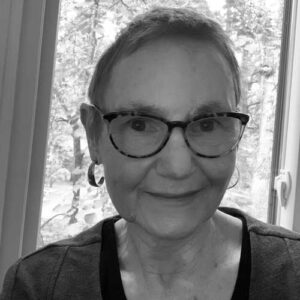
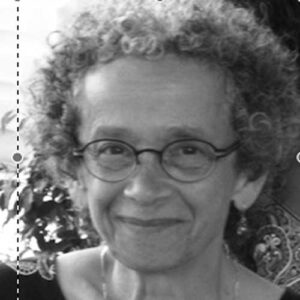

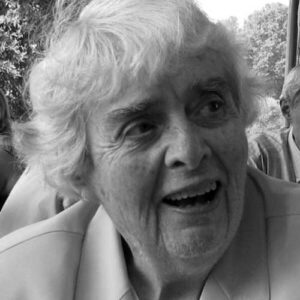
Poems that take place outside, from Maura High, Beverly Osband, Sam Schmidt, and Jean Connor.
TRANSCRIPT
We had a harsh winter this year on the East Coast: multiple snowstorms dumped nearly forty inches of snow across the Northeast Corridor. So the arrival of spring this month has been a welcome change. As the temperatures warm up, the earth comes back to life, reminding us of the beauty of the natural world that surrounds us.
April 22nd is Earth Day, a celebration introduced in 1970 to honor the earth and promote environmental protection. It can be easy to let this quiet appreciation fall by the wayside in today’s frantic world, but on this episode of Burning Bright, we’re going to stop for a few minutes and admire the details of the natural world and the cycle of life, death, and rebirth.
Poet Maura High was inspired to write this first piece after she received a film clip of her friend’s wisteria plant. She said the clip gave her the occasion to consider the vine: “what it is, how it is in itself, and its relation to people” like her friend and herself. Here’s Maura’s poem “Wisteria Sinensis, Floribunda.”
When my sister died, my friend
sent me a film clip of her wisteria, a long
tendril of new-growth green, wavering
in the wind. It was feeling
out the air, where the light is,
for a wall, a branch, a hand,
to wind itself into and around, grow
its alternate, odd, pinnately compound
leaves, the heavy, pendant clusters
of its flowers. The vine’s script
is, if not here, there; if not now,
soon. Every which way
is its way. The root’s faith
is in the earth. The flower’s
desire, for the bee:
its mouth is open, its wild scent
carries on the breeze.
You have something of my sister
in you, flower. Taking hold
in my heart. Dear heart, open,
and dumbly beating.
Maura High’s poem “Wisteria Sinensis, Floribunda” from Passager’s 2020 Poetry Contest issue.
All of nature has an urge to survive, and spring is an annual reminder of that. Beverly Osband spent her career looking at that urge as a scientist and as a psychologist. She said that writing about fate and suffering, as well as hiking with her husband, have helped her heal from life-changing loss. Here, also from Passager’s 2020 Poetry Contest issue, Beverly’s poem “Take Time.”
The good year was lost.
Blackbirds, uninjured, laugh.
In the middle of the day
bees work the cornfield.
Take time in this sweet world.
No creature wants to die.
Honeybees, peaceful, take time.
Take time, take good stewardship.
Things happen.
No creature wants to die.
Beverly Osband’s Poem “Take Time.”
Sam Schmidt said he hopes that his poems bring acute observations to light that might be hard to acknowledge. He said, “boredom disappears as I examine it. The world in which I actually exist, a world of fear and beauty, can come into focus.” Here’s Sam’s poem “Tree in the Cold.”
Early cloudiness.
The light is milk blue.
The world starts, stunned with ice,
exactly where the mind ends, somewhere
beyond the cawing of crows.
Something I can’t hear
is not quite silence.
Tracks everywhere through the snow,
footprints and paw prints.
The mercury drops till even the wind freezes.
The landscape lapses into stillness, odorless, as if
I’m walking through a black-and-white photo.
All the surfaces that gave to the touch are hard,
even the ridges of mud where a hearse
backed up making tracks through the grass.
The snow has a thin crust where it refroze –
it sounds different under my boots –
The tree, which had seemed to respire somehow,
to exude a moist presence, is closed up
into itself like a tree of bones.
I sense the heat of my own body,
a faith in things absent.
From Passager’s Winter 2017 issue, Sam Schmidt’s “Tree in the Cold.”
We’ll end today’s tribute to spring and new life with this piece from one of Passager’s inspirations, the late Jean Connor: “On Their Own.”
An old garden knows mostly
what to do. Daffodils first,
pushing their way through
wet oak leaves, faultless.
No one gives orders to forget-me-nots.
They go where they please, hugging
the edges, bordering every path
and stream. The iris, a purple
royalty, in lineage secure,
preside knowledgeably, with scarcely
a nod at old acquaintances.
And the white peonies, the Duchess
and her court? They hold forth in
June, the pages crying, “Give room.
Give room.” Sometimes the roses
need urging, a shyness, a hunger,
perhaps a want of praise …
the scholars among them
quite literary in their definition
of beauty and truth. Now,
as the clematis climbs skyward,
hand over hand, profligate in blue,
I sit by in a wicker rocker,
wildly admiring.
“On Their Own,” Jean Connor from her book A Cartography of Peace.
To buy Jean Connor’s book, subscribe to, donate to, or learn more about Passager and its commitment to older writers, visit passagerbooks.com.
Passager offers a 25% discount on the books and journal issues featured here on Burning Bright. Visit our website to see what’s on sale this week.
For Christine, Rosanne, Mary, Asher, and the rest of the Passager staff, I’m Jon Shorr.
Special thanks to New York University intern Martha Davis for researching and writing this episode of our podcast.
Due to the limitations of online publishing, poems may not appear in their original formatting.