Walter Cronkite
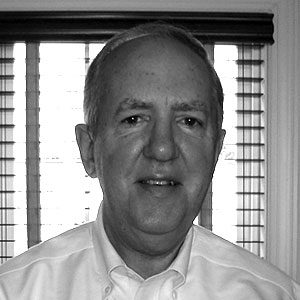

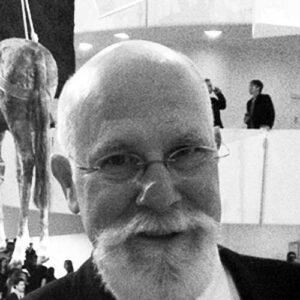
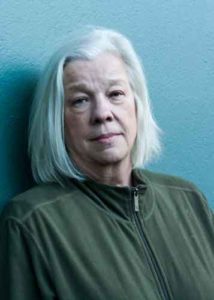
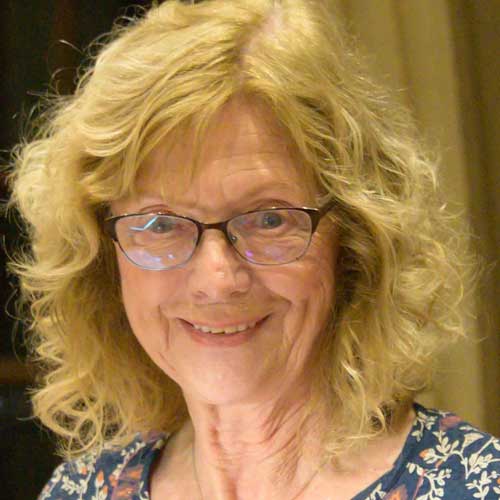
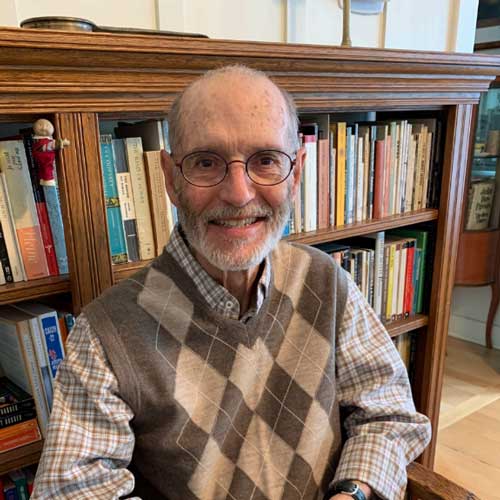
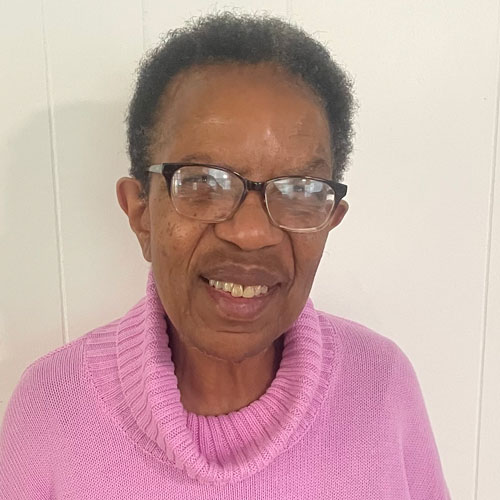
Celebrating the life and career of Walter Cronkite with history focused poetry and prose from James P. Hanley, Carol Peck, Marc Berman, and Elizabeth Kerlikowske.
TRANSCRIPT
In his earlier days, Walter Cronkite covered World War II with Edward R. Murrow and others. He anchored CBS Evening News from 1962 to 1981. He was often referred to as the most trusted man in America. Many of us learned what was happening in the world from Walter Cronkite—from JFK’s assassination and the Vietnam War to Civil Rights and America’s space program—right up until his retirement:
“And that’s the way it is, Friday, March 6, 1981.”
Walter Cronkite was born Nov. 4, 1916; He would’ve been 110 last Wednesday. On this edition of Burning Bright, pieces related to some of the stories he covered.
But first, something you won’t want to miss: a Zoom reading by several of the writers in Passager’s new issue, the 2026 Poetry Contest issue: this Sunday, November 15th 2:00 Eastern time. You can register for the Zoom on Passager’s web site.
James P. Hanley said, “The Vietnam draft had a major impact on young men during the Vietnam era. My story “Drafted” reflects some of my experiences with the unnerving process before joining the Army.” Here’s that story’s opening
Elliot had appealed his first notice, initially by letter, then by appearance at the draft board. He’d arrived early the morning of his review at the Selective Service office in downtown Brooklyn. The building was a dark brownstone with thick glass windows, and the waiting area was a row of benches in the perimeter of an office area designed for mass production of correspondence. A typewriter was at the center of each desk, platens aligned and pointed, with bins of paper to each side for loading. Fortress-gray file cabinets rimmed the walls…
After his name was called, Elliot was directed toward a high-ceilinged room at the far end of the first floor. The moss-green walls and the dark-painted reproductions of battle scenes, embossed with the name of an insurance company, muted the scattered light from the fixtures. The questions from the appeal board members came in merciless enfilade, often followed by head shaking. The draft notice arrived in a week.
At dinner the night before he was to report, his mother fussed in the kitchen, making a meal of his favorites. After a period of awkward silence at the table, his father spoke, “Your mother is very upset.” To Elliot, his father’s tone seemed accusatory, as if he was being faulted for the draft notice.
“Are you frightened, Elliot?” she asked, her voice shaking.
“Of course, Ma.”
From Passager’s Winter 2013 issue, the opening of James P. Hanley’s story “Drafted.”
Walter Cronkite loved reporting on America’s space program. In 1977, Voyager II was launched to travel to Jupiter, Saturn, Uranus and Neptune and then to leave the solar system to become a wanderer in space. Its nose cone held a time capsule, which includes a gold and copper phonograph record of some of Earth’s greatest music; the first band is the Allegro movement of J.S. Bach’s “Brandenburg Concerto #2.” This record, which will last at least one million years, bears the English message: “To the makers of music, all worlds, all times.” Carol Peck wrote that introduction. Here, from Passager’s 2013 Poetry Contest issue, is Carol’s poem “Now, Voyager.” It begins with this epigraph: “the last line of the movie Now Voyager as spoken by Bette Davis as Charlotte Vale: ‘We have the stars.’”
Blazing through the darkness, set to probe
The singing planets and deep space, you hold,
Within your loaded capsule, time out of mind:
Exuberance bound up in spiral gold;
Your vector thrusts you toward infinity,
Safely past the blackest holes in space;
Your victory: survive, endure and find
Receivers for this light from the human race;
Built to last at least one million years,
You push beyond the Music of the Spheres.
But if you should explode, a brilliant shower
Setting those magnetic pulses free,
That golden song of joy will feather out,
Spiral past each brimming galaxy,
Float serene among the dusty stars,
And then soar high on pure electric wings
To bend around the wrinkled edge of time,
Back to the Mind from which all music springs,
Charging all the universe unbound
With ringing holy silence, wholly sound.
“Now, Voyager,” Carol Peck.
A major subject of the news, then and now, was coverage of presidents. From Passager’s Winter 2013 issue, Marc Berman’s “Sentinels.”
Obama has taken up whittling.
He sits in meetings
with the Joint Chiefs,
his Republican foes,
holds a soft piece
of prime basswood
in his creased ocher palm
and calmly whittles,
little birds mostly
chickadees and wrens,
the shavings speckling
his dark blue suit
dropping to his lap
and onto the fine Persian rug.
What rattles his adversaries no end
is that hint of smile
as he serenely works the wood
into a beak or wing,
gazing wordlessly into their eyes
when sharpening his knife
on the translucent Arkansas stone
set next to his iced tea.
Should he earn a second term
they fear flocks of birds,
sentinels roosting
in the historic rooms
of the White House
long after he has departed.
“Sentinels,” Marc Berman.
You can subscribe to, donate to, or learn more about Passager and its commitment to older writers by visiting passagerbooks.com. Passager offers a 25% discount on the books and journal issues featured here on Burning Bright.
Walter Cronkite covered stories as a reporter and a news anchor for over 40 years. Elizabeth Kerlikowske catalogs several of those stories—and also events that occurred after Cronkite’s retirement—reflecting on the toll they take on many of us. Here’s her poem “So They Sing.”
She was born with the Korean War at her back and only by
being small and keeping her mouth shut had she escaped it.
She was the goat always walking uphill lugging JFK, MLK,
RFK and Freedom Riders until her thighs were monuments.
Oklahoma then World Trade Center were more weight. Too
much. Now she needed a titanium knee. In her hometown
a mad killer and three months later a bike massacre the same
week as Orlando. It will require enormous strength to go on.
She stays outside without the news, alone. She can only
shuffle; can’t even feel her feet. The birds don’t know how
the world reels, so they sing.
From Passager’s 2021 contest, Elizabeth Kerlikowske’s “So They Sing.”
For Christine, Rosanne, Mary, Johnny, and the rest of the Passager staff, that’s the way it is, Tuesday, Nov. 10, 2026. This is Jon Shorr, Passager. Good night.
Due to the limitations of online publishing, poems may not appear in their original formatting.