John Keats
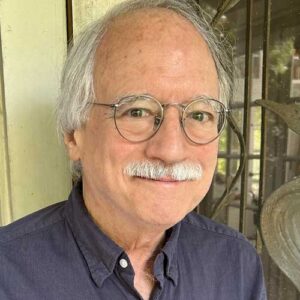
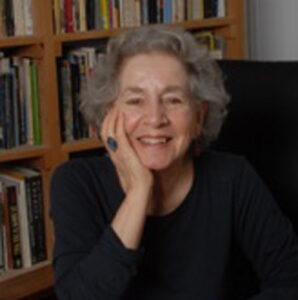
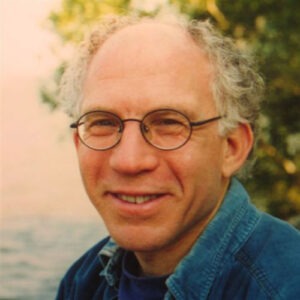
Commemorating John Keats with odes by John Philip Drury, Myra Shapiro, and Mark Elber.
TRANSCRIPT
English Romantic poet John Keats wrote lots of wonderful poems during his short life. He’s best remembered by a lot of people for his odes: “Ode to a Nightingale,” “To Autumn,” “Ode on Melancholy,” “Ode on a Grecian Urn”… John Keats died of tuberculosis Feb. 23, 1821 in Rome. That’s where he’s buried. On his grave are written the words he said he wanted written on his grave: “Here lies one whose name was writ in water.” John Keats was 25 when he died.
And SPEAKING of poets and writers, the biggest writers’ conference in the United States is going to be in Baltimore in early March, and Passager is part of it. If you’re attending the AWP conference, please stop by Passager’s table in the exhibit hall and book fair, Table 538. You’ll probably run into various Passager staffers and writers there; we’d love to meet you in person! And even if you’re not attending the conference, if you live in the Baltimore area, we hope you’ll join us Friday night, March 6, at the Pratt Street Ale House, where several writers from our most recent issue will be reading their work. You can find more specific information about that reading on our website.
To commemorate the anniversary of John Keats’s death, three odes by Passager writers.
According to various sites on my computer, Pindaric odes are elaborate lyric poems named for the Greek poet Pindar, celebrating heroic deeds or athletic victories with a grand, elevated tone and a distinct structure. Pindaric odes were particularly popular in 17th and 18th Century England, people like John Milton, and John Dryden, and Alexander Pope. Passager poet John Philip Drury said he followed some of the rules of the Pindaric ode when he wrote his poem “Abecedarian Ode.”
Alphabet, how I’ve loved you from the start,
before I entered grade school, reading BAT
CAT HAT MAT PAT on cue cards
drawn by Miss Ridah for her kindergarten,
enunciating words in a one-room schoolhouse,
finding out how to see language through rhyming
groups of letters, some the same, some not,
hearing symbols like true bards.
I count on you now for my retrieval system,
jolting me back from dead-ends of memory,
knowing that at this age I’ve
lost any chance to win on Jeopardy,
missing the quick recall of trivia,
names not coming fast enough, synapses
off that should be firing. But you make
pilot lights flick alive.
Quicken my mind, my senses, till the end.
Rub me to recollection.
Slip me the skeleton key, the secret clue
to restore a lost connection
until I grasp what’s missing and un-fog
views time has blurred
which A to Z can cleanse and polish,
X’s and O’s can kiss and hug to pieces.
You give me your word,
zealous in rapt assistance to the end.
John Philip Drury’s “Abecedarian Ode” from Passager Issue 77, the 2024 Poetry Contest issue.
Myra Shapiro said she taught literature for years, so when she decided to write some poems of praise, she thought “I’m a fan of the Ode. Why not try for a modern take on one?” Here’s Myra’s poem “Ode to Elsewhere.”
When I was six or seven
my mother arranged piano lessons.
We had no piano; a keyboard
made of cardboard was to do
Mozart.
After school I practiced for a year
playing notes without a sound
to learn what, in this land of milk
and honey, she aspired to: Beauty.
Culture.
At dinner my father forbid us
to talk. There was news
to listen to on the radio. A war
was going on. The world, it was
elsewhere.
My parents came from there:
a place charged with flight.
I wanted to fly, a dreamer
raised to make matchless
music.
From Passager’s 2017 Poetry Contest issue, Myra Shapiro’s “Ode to Elsewhere.”
Mark Elber grew up in Queens, spent a lot of time getting around town on the subway, constantly aware of the diversity of languages and dialects that surrounded him. As a writer, he’s a descendant of poets like Walt Whitman and Allen Ginsberg. Here’s Mark’s poem “Ode to Accents.”
When I open my mouth people hear Second Avenue Deli, pastrami
on rye, sour pickles, rattling tracks of the local to Shea Stadium,
Queens Boulevard staring at Manhattan’s skyline
I affect the sound of falafel, bourekas, babaghanoush, but everyone
hears latkes sizzling in the background
When my parents opened their mouths people heard borsht, stuffed
cabbage, gefilte fish, Slavic winters
Each “w” a “v,” each “th” a “t”
They never spoke to me in their mother tongues
Preferring the language of my native New York, hoping I’d blend in,
like they couldn’t
Our names bore our ancestors on our backs from one exile to another
A covenant of sound stretching back to the craggy hills of Jerusalem,
the caves of Qumran
A shibboleth awaiting its resurrection
The words of my parents
A living link to the world turned to ash by 1945
From his book Headstone, Mark Elber’s “Ode to Accents.”
To subscribe to, donate to, or learn more about Passager and its commitment to older writers, visit passagerbooks.com.
Passager offers a 25% discount on the books and journal issues featured here on Burning Bright. Visit our website to see what’s on sale this week.
For Christine, Rosanne, Mary, Asher, and the rest of the Passager staff, I’m Jon Shorr.
Due to the limitations of online publishing, poems may not appear in their original formatting.