Frida Kahlo’s Death
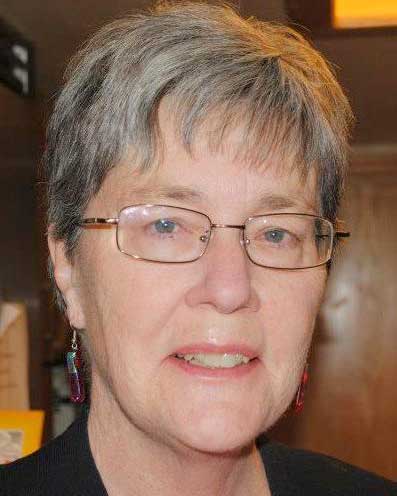

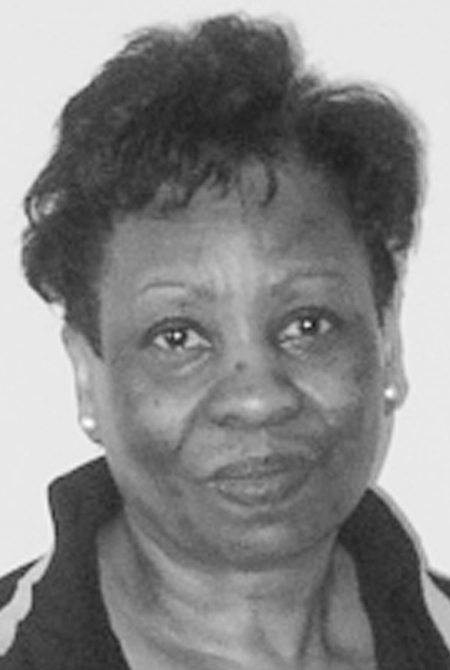
The trials, tribulations and beauty of possessing a body, featuring poems by Jane Ellen Glasser, Susan Okie, Don Thompson, Joyce LaMers, and Larnell Custis Butler.
TRANSCRIPT
Mexican artist Frida Kahlo was born July 6, 1907. She was in a bus accident when she was 18, and it left her with severe chronic pain for the rest of her life. About a third of the paintings she created are self-portraits. And many of those reflected her pain. One, for example, shows her torso split open, with a crumbling architectural column as her spine and tears streaming down her face. In another, she paints herself as a deer pierced by several arrows. Frida Kahlo died at age 47 on July 13, 1954.
Passager writers know what it’s like to have bodies that aren’t as good as new. On this episode of Burning Bright, we’ll commemorate Frida Kahlo’s life and death with some pieces about bodies that are no longer those that moved earth and heaven—to sort of quote Tennyson.
We’ll start with Jane Ellen Glasser’s poem “Arguments Against a Hearing Aid.”
I have no difficulty carrying on conversations
with myself. In dreams my hearing’s perfect.
There’s more room for silence – that stilled pond
upon which my best thoughts float.
Never one for idle talk, I get by with a head shake
and a smile. Eventually eyes, those quick learners,
pick up a second language. As for the world,
despair is a bottom feeder, it cups its ear
to bad news. Every day I decrease the number
of war dead, starving children, natural disasters.
I keep telling myself, you’ll never miss
the dance of squirrels mornings on the tin roof;
behind the house, the kiss of the kingfisher
puncturing a hole in the Lafayette River;
the plucked heart of a Brahms concerto;
the vespers of birdsong in the pines.
From Passager’s Winter 2015 issue, “Arguments Against a Hearing Aid,” Jane Ellen Glasser.
Do you ever scratch your arm or your back and notice how different your skin feels—or you feel something that didn’t used to be there? Here’s “Metamorphosis” by Susan Okie from Passager’s 2016 Poetry Contest issue.
Each day drier,
sandpaper skin
pebbles my shoulders.
Warty tags pop out.
The high desert’s
adapting me,
molding the squat,
flattened shape
and blunt snout
of a short-horned lizard,
one of a dozen species
found in North and Central
America.
Spikes will grow
along my spine –
yellow, reddish-brown.
I look forward
to the crown of horns
sprouting on my head,
poking through gray hair.
Ants will be my staple.
I’ve tried one,
snapping it up,
swallowing it whole.
For balance, I’ll chomp
the occasional grasshopper,
beetle or spider.
Earth tones of my thorny
hide will camouflage me
from those who crave lizard –
hawks, roadrunners, snakes,
dogs, wolves, coyotes,
other lizards.
I’m learning
to inflate my body
to twice its size.
If that doesn’t suffice,
I’ll shoot blood
from my eyes.
Susan Okie’s poem “Metamorphosis.”
In 2011, Passager published an anthology of some of the editors’ favorite pieces from the journal’s first 21 years. One was Don Thompson’s poem “Show and Tell.”
1
It’s true. The knees do go first, but they suffer in secret.
No one even notices your brief, inadvertent hesitation on the stairs
or sees you wince. And no one needs to know about the libido,
how it slows down, unwinding like an old-fashioned alarm clock.
Those leftover analog urges can’t keep up in a digital world
in which only the pain ticks, telling its own kind of time.
2
But the chin has nothing to hide. It’s shameless—
robber baron’s jowl, a self satisfied iguana’s wattle.
Softening like fruit, already overripe, that will rot on the tree.
it sways in the wind of your hoarse voice, pure blather
after all these years. What happened to the Adam’s apple
that used to jut and jump, so lively back when you knew it all?
3
And those feet, fraternal twins who never got along,
forced to wear matching shoes and go everywhere together,
though sedentary now, insist on their own quirks:
bunions, corns, hammer toes, nails like walnut shells.
The left hand finally knows what the right hand is doing,
but doesn’t care any more. There’s not much to envy.
4
The mirror has become a malfunctioning time machine
that doesn’t reflect gray. But store windows won’t lie:
still vain, you seem to be wearing a thin, silver helmet
purchased on the streets of Ensenada: “Guaranteed sterling, amigo.”
Or you sit quietly in the barber chair, snow falling around you,
and see your father in your own image, replicated ad infinitum.
5
A fog brewed in the bones rises, clouding your vision
on cold mornings. Cautiously, with stiff joints but undaunted,
you still manage to climb the ladder of sleep,
trying to remember which rungs are cracked, which one is missing.
When the heat is on, you move at Galapagos speed;
then waking is a long haul through sand to reach the surf again.
6
Most of what you struggled so hard for so long to learn has gone
back to the books it came from, Good riddance.
Let the mind return to its childhood predilection
for mystery and stop aching to understand how things work.
That autumn leaf you found and took to kindergarten for show and tell
has become a leaf again, vermilion so vivid it will outlive you.
Don Thompson’s poem “Show and Tell.” Here’s one more from that anthology, “When the Aspirin Bottle is Empty” by Joyce La Mers.
Pain can be gentle,
a soothing friend
that comforts and sustains.
Welcome the old companion
with whom you can relive
the moments of your life,
the day by day erosions
you’ve survived. Let
twinge of stiffened knee,
unsteady heart, nudge
missing parts together,
reminding of a time
when you were whole,
connecting all you were
with who you are.
“When the Aspirin Bottle is Empty,” Joyce La Mers.
We’ve been remembering Frida Kahlo’s life with poems about aching bodies. But she also painted portraits of other people, often in a style that reflected Mexican folk art and history. We’ll end with this portrait by Larnell Custis Butler, “When You Kiss Me, You Kiss the Motherland of Africa.”
I am a Black woman, and my skin
Is not whiter than snow.
My darkness is the signature of
The motherland of Africa’s truthworthy
Spirit.
When I smile, my thick lips reveal
That I am alive, and living well
As best I can—Free as any state
I chose to be.
Kiss my hair, you kiss Senegal.
Kiss my head, you kiss Nigeria.
Kiss my neck, you kiss Kenya.
Kiss my shoulders, you kiss Sudan.
Kiss my arms, you kiss Zaire.
Kiss my hands, you kiss Angola.
Kiss my chest, you kiss Uganda.
Kiss my body, you kiss Tanzania.
Kiss my legs, you kiss Mozambique.
Kiss my feet, you kiss South Africa.
When you kiss me, you kiss the
Motherland of Africa.
From her book Improvise in the Amen Corner, Larnell Custis Butler’s “When You Kiss Me, You Kiss the Motherland of Africa.”
To subscribe to, donate to, or learn more about Passager and its commitment to older writers, visit passagerbooks.com. Passager offers a 25% discount on the books and journal issues featured here on Burning Bright. Visit our website to see what’s on sale this week.
For Christine, Rosanne, Mary, Sarah, and the rest of the Passager staff, I’m Jon Shorr.
Due to the limitations of online publishing, poems may not appear in their original formatting.
Not pictured: Don Thompson.