Organ Recital
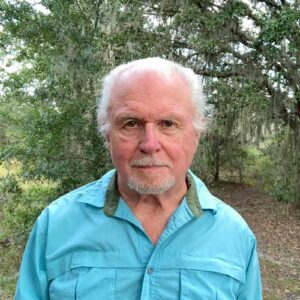
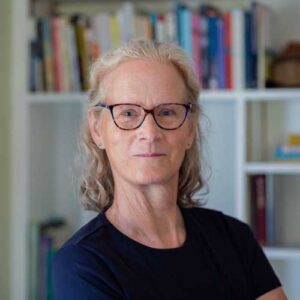
Reflections on aging body parts by Harry Bauld, Michael Brodin, and Katherine Briccetti.
TRANSCRIPT
One of the great organists of the 20th Century, E. Power Biggs, was born March 29 in England, but spent most of his life in the United States. Reading about him reminded me of organ recitals. And that reminded me that the same term is used, as a label for conversations, especially involving older people, about their ailing body parts. To celebrate E. Power Biggs’s birthday and organ recitals, some pieces that Passager writers have written about their body parts, not to complain, but to create images and meaning.
First, from his book The Uncorrected Eye, Harry Bauld’s poem, “In the Street Without My Glasses.”
Blur sips at the blue bowl
of morning. The heart,
old mole, noses forward
to sense something of steel, maybe
of stone – without a lens the filth
is gone. Unrefracted men and women
regress toward a trembling Monet mean,
trees and marquees go dumb
in the warble of sky,
and even nameless cars
dodging their promised manslaughters
gleam like starlings
under bus faces smeared
to leaf and petal. Someone crosses
the street, a tremolo
of arm, a shudder of color
smoothed to one age, race and sex
as light as that shadow
shimmering off the asphalt
like distant desert heat, the true flicker
we may be. The world
before the uncorrected eye
brims, marbles, quivers
over its boundaries, wells.
Harry Bauld’s poem “In the Street Without My Glasses.”
Next, Michael Brodin learns that he needs a pacemaker.
I had always prided myself in having a slow heart rate… but too much of a good thing isn’t necessarily a good thing, and a heart rate can be too slow… The symptom that led me to this conclusion was a peculiar light-headedness which made me feel like my brain was being replaced by helium. Once, in early February, while merely walking down the street, it seemed that the volume of helium had reached a critical level and had actually replaced that portion of my brain tasked with keeping me upright. As I continued walking the choice before me became clearer and clearer: sit down or fall down. My pulse was 38, well below the normal limit, generally considered to be 60. This condition is called bradycardia, for which I well knew there is only one treatment, an implantable pacemaker.
…I view life through the lens of the Apocalypse rather than the Pearly Gates. I concentrate on the negative. To me a risk/benefit ratio is most accurately depicted as a RISK/benefit ratio. And so a pacemaker to me meant possible endocarditis, pneumothorax, and myocardial perforation with cardiac tamponade, not an existence blissfully free of palpitations, dizziness, fainting, and strokes.
So it was that I somewhat reluctantly consulted a cardiologist, who, after suitable testing, confirmed my diagnosis and treatment, and set me up for the operation – the very next day.
From Passager Issue 70, excerpts from Michael Brodin’s “My Heart Belongs to Medtronic.”
We’ll end with this piece about wrestling with the realities of an aging body. Katherine Briccetti said she starting writing this next piece in her head while she was trudging up Mt. Etna in Siciliy. Excerpts from her piece “Facing the Beast.”
My heart beat so rapidly I feared stressing it to the point of a heart attack, and I simply couldn’t catch my breath. I needed to stop again… Watching the others continue, I felt shame. I was like the woman previous hikers had complained about in reviews of the trip. The one who misjudged her ability; I was the one who was not fit enough after all and should have never signed up…
I imagined stopping and turning back and hated the idea. My favorite tee shirt reads, “Nevertheless, she persisted.” In sixth grade, my best friend and I rode our bikes twenty miles in a Bike-A-Thon to raise money for a children’s charity… Then, when I was forty-five, I walked with three girlfriends from San Jose to San Francisco to raise money for breast cancer research. On the third day, despite training for the walk for a year, I injured my knee, and when I should have accepted the van ride to the finish line where my partner and young sons were waiting for me, I insisted on hobbling along with my knee taped while swallowing ibuprofen. Now, on Etna, I felt both shame at not keeping up and shame at the possibility of quitting.
…I knew I would not make it. I did not want to suffer a heart attack or a stroke. I would be embarrassed by my age and inability to finish. I would be upset with myself. I didn’t know what quitting felt like.
When I started the day, I assumed one thing: I would hike up and down a volcano and capture a fantastic view with my camera. But something else happened. Sicily’s mama did not mother me, she kicked me in the ass… I admitted weakness and, ultimately, defeat. It hurt, sure, but I’ll remember the euphoria I felt on the way down, the sureness that I had made the right decision. I have a tiny scar on my ankle now from Etna. So, I carry both a physical scar and an emotional one, but I know both eventually will fade. And, for now, I thank her for being the one to show me what I can survive.
From Passager’s Winter 2025 issue, excerpts from “Facing the Beast” by Katherine Briccetti.
To buy Harry Bauld’s book The Uncorrected Eye, to subscribe to, donate to, or learn more about Passager and its commitment to older writers, visit passagerbooks.com.
Passager offers a 25% discount on the books and journal issues featured here on Burning Bright. Visit our website to see what’s on sale this week.
For Christine, Rosanne, Mary, Asher, and the rest of the Passager staff, I’m Jon Shorr.
Due to the limitations of online publishing, poems may not appear in their original formatting.