Words for Webster


Celebrating Noah Webster with poems about words from Jennifer Pratt-Walter, Sherri Stepakoff, Sarah Yerkes, and Hal Grinberg.
TRANSCRIPT
Noah Webster was born October 16, 1758. He was an abolitionist and a strong and early supporter of the American Constitution. But Noah Webster’s best remembered now as an applied lexicographer. That means he liked compiling words and trying to create uniform use of those words among people who spoke and wrote that language. In Webster’s case, of course, it was English. And his compilation, of course, was Webster’s Dictionary. On this edition of Burning Bright, some poems about words.
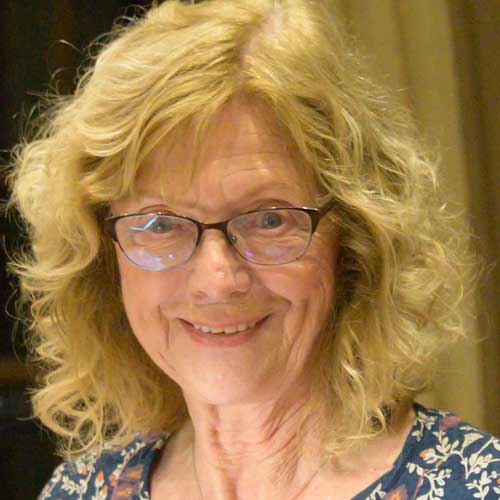
Jennifer Pratt-Walter said that her poem “A Clothesline of Words,” was inspired by her love of using a clothesline and experiencing nature’s elements of air and sun, as she hung up wet clothes and gathered in the fresh fragrant dry ones. She said, “Obviously the intent of the work goes much further, with finding a sense of order and groundedness inside myself in a complicated and distressed world. The daily task here becomes a powerful moving meditation that involves all the senses. It gives me to the world and the world gives me back to myself, and we’re both the better for it.” Jennifer’s poem, “A Clothesline of Words.”
I weave order out of daily chaos by listening to Bach
and by hanging out laundry in rainbow color schemes
and alternating patterns with plain fabrics.
Like air, I cannot keep my thoughts
from touching everything I meet,
testing syllables like loose dandelion seeds.
Words become clothing the morning wears –
liberating, watchful, protective. Hopeful as honeybees.
I hang this poem up in the sky inside me,
metered like Bach and in rainbow colors
amidst my plain and imperfect patterns,
wringing troubles out with the wind.
From Passager Issue 77, the 2024 Poetry Contest Issue,
Jennifer Pratt-Walter’s poem “A Clothesline of Words.”
Sherri Stepakoff said that when she was young, her grandfather told her that the expression “May your head grow in the ground like an onion” was the worst thing you could say to someone. She said that even though she didn’t understand why it was an insult, the image stuck with her. She said, “Nearly five decades later, I’ve written this poem to hold a space of love and compassion for the lives of my forefathers and how, not unlike other people, they coped with pervasive persecution.” Here’s Sherri’s poem “My Forefathers Talking.”
“You should grow like an onion
with your head in the ground – ”
zolst vaksn vi a tsibele: mitn kop in drerd –
is the worst thing I can say to you.
The Torah does not allow me to curse
so I say it like a yo mama joke
with the intention of venomous voodoo
just one of many well-honed “blessings”
coming from centuries in the shtetl
but you know it is a curse so you spit it out
of your life with a feh from your lips
like our great, great, grandchildren
will smudge with sage and wave away
negative energy with their hands
in America
where the streets are paved with gold
where dirt floors, muddy streets, and laws
saying we cannot own land or live
in the town will be a thing of the past.
“May all your teeth fall out except one
which should remain for a toothache – ”
Ale tseyn zoln dir aroysfaln,
nor eyner zol dir blaybn af tsonveytik –
you retort.
I counteract your curse with my feh
and spit away evil spirits, puh, puh, puh
because although our souls already know
that there is light, we are light, still
when your head may not be allowed to grow
above ground, you cannot be too careful
Sherri Stepakoff, “My Forefathers Talking” from Passager, Issue 75, the 2023 Poetry Contest Issue.
Next, from her book Days of Blue and Flame, “Flying Words” by Sarah Yerkes, which she dedicated to E.D.
I’m nimble, now, at catching thoughts –
I put them into words
like fireflies in an old jam jar
or cages full of birds.
Eventually, I take them out –
they do not fly away –
but sit beside each other
in a neat poetic way.
Sarah Yerkes’ poem “Flying Words” from her book Days of Blue and Flame.
We’ll end this podcast about words with Hal Grinberg’s poem “Ars Poetica” from the brand new issue of Passager.
I lay words side by side
Like bricks
Build down the page, a world of
Reverse gravity, like walking into
History, like remembering.
It is a wall I build, like
The side of a house, to keep you out,
To keep me in. I write a boundary,
This is me that may border on you.
I’m building a wall, brother. If I measured
Right and my poem reaches the ground,
Read it and rest awhile.
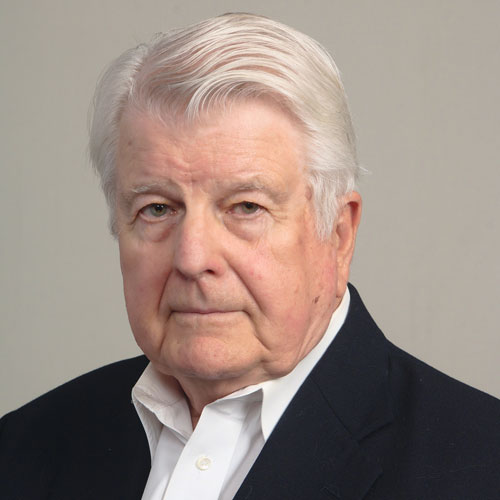
“Ars Poetica,” Hal Grinberg. Hal said the words of a poem looked like bricks, solid,
rectangular and being fit together. He said he used to write a lot, but as was the case with so many of us, his life and career got in the way. He said, “Now that I’m retired, I’m working to get that mojo back.”
To buy Sarah Yerkes’ book Day of Blue and Flame, subscribe to, donate to, or learn more about Passager and its commitment to older writers, visit passagerbooks.com.
Passager offers a 25% discount on the books and journal issues featured here on Burning Bright. Visit our website to see what’s on sale this week.
For Christine, Rosanne, Mary, Asher, and the rest of the Passager staff, I’m Jon Shorr.
Due to the limitations of online publishing, poems may not appear in their original formatting.