Black History Month


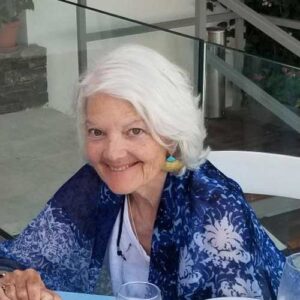
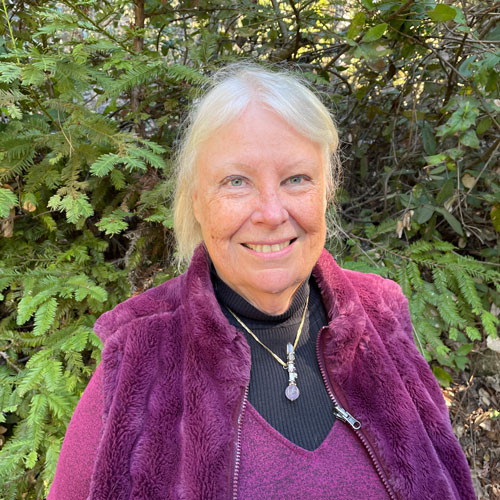
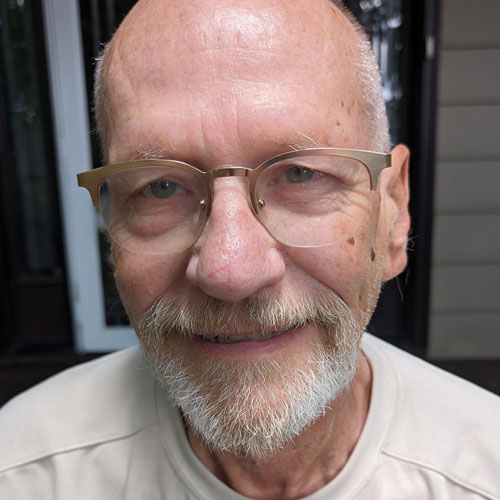
Poems and excerpts on learning about Black history, by Kevin Nance, Elizabeth Esris, Kathleen O’Toole, and Melvin Douglas Williams.
TRANSCRIPT
February is Black History Month. Historian Carter G. Woodson began Negro History Week in 1926 to spotlight Black achievements, especially those that most of us may not know about. He chose February because that’s the month Abraham Lincoln and Frederick Douglass were born. In 1976, as part of America’s bicentennial, President Gerald Ford expanded it to a month-long observance. We’re going to observe it on this edition of Burning Bright, a weekly podcast presenting poetry and prose from Passager.
Kevin Nance said, “It’s always a shock when you find out important information that has been kept from you.” Here’s his poem “Wilmington” which he dedicates to Joe Anthony.
I spent my childhood thirty miles inland,
watching The Jim Burns Show on the NBC
affiliate and reading the Morning Star. We’d cruise
down Ocean Boulevard to Wrightsville Beach,
tour the old battleship USS North Carolina
docked forever in the Cape Fear River,
eat fried shrimp at Calabash. On family visits
in later years, I’d fly through ILM & drive past
Laney High, where MJ played JV. It was an easy,
airy, sea-salted city. Mini-golf in the sun. Azaleas
in the shade. Driveways paved with crushed
oyster shells. Never once did I hear a single word
about what happened on November 10, 1898,
when Alfred Moore Waddell & a mob of white
supremacists armed with rifles & a Gatling gun
burned the black Daily Record to the ground
& then went house to house, slaughtering at least
sixty black people & up to three hundred, then staged
a coup d’état, replacing the biracial city council
& installing their own mayor, Waddell, who’d vowed
never to surrender to a ragged raffle of Negroes,
even if we have to choke the Cape Fear River with carcasses.
I’m sixty when I learn about the Tulsa massacre
from a superhero miniseries on HBO. I’m sixty-one
when my New Jersey-born landlord tells me what
happened in Wilmington, his voice rising in anger
& falling in sorrow, & the black & white movie
of my youth starts to play again, this time in color.
Kevin Nance’s poem “Wilmington” from Issue 74 of Passager, the Trauma issue.
Elizabeth Esris said that after writing a piece about James Baldwin for an on-line journal, she wrote this poem wondering why his voice hadn’t been part of her high school education.
“A Letter 60 Years Too Late.”
Dear James Baldwin
It should have been in high school
that I read your claims to identity, language,
truth learned in streets,
in church, behind walls;
that I heard you ambush negro
and colored and the word I won’t say.
You knew why
there were roaches uptown
and stone lions guarding
the 42nd street library.
Your eyes refused
to be told what they could read.
Your voice declared the universe had room for you
even when you felt
“fear by day and night, fear as deep as the marrow of the bone”
and asked the question –
“What will happen to all that beauty?”
If your question had been asked
I might have known more
than the angst of Holden Caulfield
the disillusion of Gatsby
the impulse of Romeo.
Perhaps, in my senior class
of 600 white and 4 black faces
I might have seen beyond the cheers
for David Patton’s power on the football field,
beyond his smile in the lunchroom.
I might have felt outrage,
cried out that autumn when he left for Viet Nam.
And maybe I would have been more than sad
and less astounded
that it was his strong black body
dying in a war
that my white college friends and I would never know.
“A Letter 60 Years Too Late,” Elizabeth Esris from Passager’s 2023 Poetry Contest issue.
Next, this from Kathleen O’Toole. “Small Comfort.” It begins with this quote from Thomas Blanton, Jr., convicted May, 2001: “God will settle this on judgment day.”
How will we settle such a score, heal a scar
still leaking toxins like those train cars
in an old tunnel under Baltimore?
Thirty-eight years, and still the pure
terror of that September day in Birmingham
returns in voices that flutter and land
like acid rain on my skin. Penetrate and
alarm us. Sarah, sister of Addie Mae, hand
us the mirror, the shards of glass you carried,
your lost eye. You become us, become me
holding evidence of what was unleashed
in my name and seeping still under harried
streets we tread. How to read the convicted
bomber’s face, his jaw set, depicted
for us—as us—ascribing justice to his white
God? I have seen this face of hate
under bowler hats in Ulster; but my rage
to sentence him—even multiplied by four—
won’t incinerate all complicity that courses
still in we. Turn the page:
uncertain future, rumblings of protest,
little comfort. —Sarah— someone ought to be . . . left
to see with our one clear eye. Still
we possibly shall. (Will we?)
“Small Comfort,” Kathleen O’Toole, from Passager’s Martin Luther King issue.
And finally this, also from Passager’s Martin Luther King issue, from Melvin Douglas Williams, also known as “Little Melvin.”
The day Dr. King was assassinated I was in the poolroom where I spent most of my
life . . . The poolroom was on Pennsylvania Ave. and Smithson St. I remember that everybody was running around seeming to be disturbed; because someone that they had not really known personally, was so personally associated with them. And what he stood for and how now, all of a sudden, this person’s existence is so much more profound than it was in the past.
Someone came into the poolroom and just shouted out, “Man, they just killed Dr. Martin Luther King.” Everybody looked wide-eyed and mystified at each other, “Aw, he don’t know what he’s talking about.” This guy is the first to blab all the time. Everybody started going in different directions to see if it was the truth. So we turned the radio on then we turned the TV on and in minutes we found out that he had been killed.
It seems that whenever one of us reach a form or a point of prominence, something bad always seems to happen to him. It happened to Martin, it happened to Malcolm. It seems that each time one of us gets so smart that he wants to wake the world, they want him dead.
Melvin Douglas Williams remembering hearing about Martin Luther King’s 1968 assassination.
To subscribe to, donate to, or learn more about Passager and its commitment to older writers, visit passagerbooks.com.
Passager offers a 25% discount on the books and journal issues featured here on Burning Bright. Visit our website to see what’s on sale this week.
For Christine, Rosanne, Mary, Asher, and the rest of the Passager staff, I’m Jon Shorr.
Due to the limitations of online publishing, poems may not appear in their original formatting.
Not pictured: Melvin Douglas Williams