The Holocaust
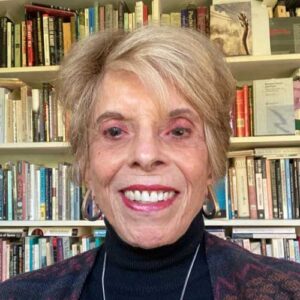
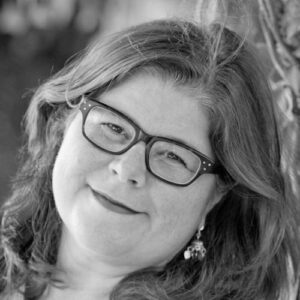

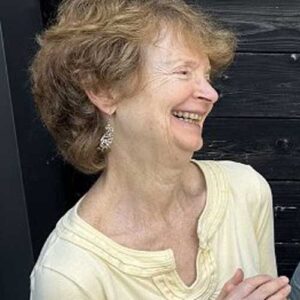
Recognizing International Holocaust Remembrance Day with pieces from Rachel Heimowitz, Claire Kahane, Fran Markover, and Rosanne Singer.
TRANSCRIPT
There are two days when we officially remember the WWII Nazi genocide: Holocaust Remembrance Day, Yom Hashoah, is the 27th of the Hebrew month of Nisan; in 2026 that corresponds to April 27; it celebrates the Jewish resistance to the Nazis’ attempts to destroy them. There’s also International Holocaust Remembrance Day, observed each year on January 27, the day in 1945 that the Auschwitz concentration camp was liberated. Its goal is global education to prevent future genocides.
On this episode of Burning Bright, four pieces related to the Holocaust.
Rachel Heimowitz said she was thinking about raising her children through intifadas, terrorism and the first Gulf War. She said she has children in Israel including one “who arrived home from his high school, in the area where three were killed in a terrorist attack today.” Also implied in the poem is Kristallnacht, the Night of Broken Glass, that night in 1938 when the Nazi party, Hitler Youth, and German civilians destroyed Jewish synagogues, houses, and businesses. Here’s Rachel’s poem “Glass in a Hailstorm.”
These days mercy
is all we can ask for—
a finger here, a finger
there—little fingers on my cheeks
waking me to the Sunday morning
nightmare, the 8 a.m. #18 bus explodes
—again.
Should I dress the girls?
Send them off to school?
These girls who taught themselves
to dance in gas masks,
jumping on the bed,
falling back into a jumble
of pillows and air filters,
the window behind them
buttoned in a masking tape cross.
We walk to shul
in the quiet of shabbat,
past the burned-out bus,
its battery acid smell
filling the atmosphere
and these girls, my girls,
their hands soft as the air at dawn,
my high heels clicking the pavement,
the morning chill fingering my hair.
Soon enough they too
will wake to the pop of a stun grenade,
learn to run long distances in mud,
make their way guided by stars,
their lives fragile
as glass in a hailstorm.
From the Winter 2016 issue of Passager, Rachel Heimowitz’s poem “Glass in a Hailstorm.” Rachel said, “No matter what we do, what we write, or what we say, violence in the world continues. And meanwhile we just continue to nurture our children. We have no choice; it is the only way.”
Claire Kahane grew up in the Bronx, the daughter of Jewish immigrants. Here’s an excerpt from her memoir “Cats Go for your Throat.”
When the war ended, my parents tried to get news about their families in Europe, writing to relatives and hoping for some reply. It came for my father one day in the form of a letter on a sheet of the thin blue Air Mail paper. I watched him unfold it carefully, read it in a language I couldn’t understand, and then, with a sobbing intake of breath, drop the letter, his body crumpling as he sank down into the kitchen chair. I had never seen my father cry. Something awful had happened, but I was too frightened to ask what it was.
Later, my mother explained that the letter was from the Postmaster of my father’s hometown in Poland, telling him that his mother, father and sister were all dead; the Nazis had locked them in their house and set it afire.
From that time forward, my father became God’s angry man, shaking his fist at religion and literally bringing home the bacon for breakfast every weekend. Out of spite.
An excerpt from Claire Kahane’s memoir “Cats Go for your Throat,” that Passager published in its 2023 Trauma issue.
The thing about trauma, whether personal, familial, generational, or cultural, is that it lives on. Here’s Fran Markover’s poem “Memorial for My Name.”
Great-grandmother
shadows over me,
last dream,
crying out our name –
Feigele, Feigele.
Her spirit covers me
like a prayer shawl
in the night’s chill.
Great-grandmother
yearns for her family,
last dream, whispering
my story, my name.
Among the incense
of pogrom ashes
she pleads, who’d
harm an old woman?
Great-grandmother
hovers over me,
light as a firebird,
last dream.
Orange flames
that consumed her
at Buchenwald,
consume me,
shivering in my bed,
burning.
From her book Grandfather’s Mandolin, “Memorial for My Name,” Fran Markover.
Passager’s editor-in-chief Rosanne Singer writes about those handed-down anxieties, too, in her poem “I Dream of Safety.”
even when I am safe. As I unlock
the front door and twilight filters
through the apartment windows
and I am home, I don’t believe it.
When I walk out the door in the morning
I think about the evening, how safe
I’ll be on the sofa, having carried
the dinner plate to the coffee table.
Is this my dream or the dream
of someone else? Maybe my father
who swept up the broken glass
of his synagogue in 1938 Frankfurt.
Or my mother who wiped blood
from the auburn hair of her father
sprawled on the floor of his Baltimore
body shop October 1939.
Did their nightmares migrate? Am
I keeping alive the fear of the baseball bat
in the dark body shop, the held breath
of my grandmother hiding behind drapes,
about to board a cattle car to Auschwitz.
From her book Home Theater, “I Dream of Safety,” Rosanne Singer.
To buy Fran Markover’s book Grandfather’s Mandolin or to subscribe to, donate to, or learn more about Passager and its commitment to older writers, visit passagerbooks.com.
Passager offers a 25% discount on the books and journal issues featured here on Burning Bright. Visit our website to see what’s on sale this week.
For Christine, Rosanne, Mary, Asher, and the rest of the Passager staff, I’m Jon Shorr.
Due to the limitations of online publishing, poems may not appear in their original formatting.