Women in Medicine
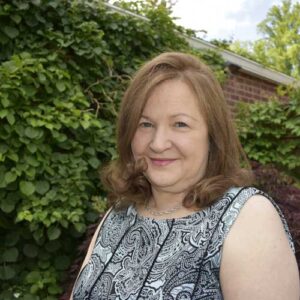
Featuring pieces from Dr. Denisha Naidoo, Dr. Beverly Greenspan, and Dr. Michelle Morouse.
TRANSCRIPT
November 1 was the anniversary of the opening in 1848 of the first American medical school for Women, The Boston Female Medical School. In 1874, it merged with the Boston University School of Medicine and became one of the nation’s first co-ed medical schools.
On this episode of Burning Bright, some pieces by women who spent their careers in the medical profession.
Dr. Denisha Naidoo, a family physician with an interest in mental health, got her M.D. from the University of Toronto. Here’s an excerpt from her story “The Old Woman and the Cottage.”
When the truck arrives with a big dog, black as night, she knows death is coming. But she’s glad it will hold off a few more hours at least. She’s been yearning for this meeting.
“Where do you want the firewood?” Jarvis asks. She points to the shed. He nods, backing the truck up to the three-sided shed. The dog sits in the passenger seat, his muzzle resting on the open window, nose twitching in the air.
“Your dog friendly?”
“Yup.”
“You wanna let him out? I’ll get him some water.” She heads to the cottage, swaying with each bow-legged step. When she reaches the door, Jarvis lets the dog out of the truck. Ouzo noses his hand for a pat before stretching out in the autumn sun. Most folks are afraid of Ouzo. Even his mother was afraid of the dog. His mother. She didn’t get to be old. “Accidental overdose” is what the coroner told him. That was an accident waiting to happen. Now he feels lost, living in a boarding house room.
She comes back out with a bowl of water and puts it beside the dog. “What’s his name?”
“Ouzo.”
“That’s a good name.” Hearing his name, Ouzo stands up, shakes, and laps up the water.
“You want something to drink? I made some tea,” she says. He stops stacking the firewood, takes his hat off and wipes the sweat from his forehead with the back of his sleeve. His heart pounds even though he is young and lean from a lifetime of heavy work.
“Tea would be good.” She heads back to the cottage, her body a metronome marking time.
When she comes back, he has finished. Ouzo puts his large head in her lap. She smiles revealing missing teeth and pats his head, her hand thick, the joints gnarled. The silence is comforting. Sitting beneath the maple tree, the earth solid beneath his feet, the breeze calms his thoughts. A person could feel at peace here, at home.
“This is a quiet place,” she says, “a good place to call home.” She sips her tea, one hand patting Ouzo’s head.
An excerpt from Denisha Naidoo’s story “The Old Woman and the Cottage” from Passager Issue 76.
Retired neurologist Beverly Greenspan got her medical degree from the University of Miami. Here’s her poem “Into a Silence.”
The seals still jabber
and the orca whistles with its pod
in the exuberant waters
but the words are forgotten
that shaped the sense of sinew and wind,
of shell and snow, of drums and mystery
among the speakers of Eyak
since Marie Smith Jones,
who was the last whose native tongue it was,
died in 2008, even those names
the common coinage of another language.
But into that silence
among the sea otters and the salmon,
the stones under ice, and the new inarticulate roar
of engines, came a student from a French school
who had taught himself from DVDs
to be the only one
to speak the lost language fluently.
At 21 he traveled to Alaska, trying
to teach those who were speaking to each other
without those words, astonishing them
with his passion for what was abandoned, astonishing
the summer sun and winter darkness
the whales and the birds of the sea,
as if a shell
full of the absence of what lived in it
echoed against his ear, as he set sail,
his tongue navigating the wash of sound
through which they were once known.
From Passager’s 2020 Poetry Contest issue, “Into a Silence” by Dr. Beverly Greenspan.
Pediatrician Michelle Morouse, said that while she attended Wayne State Medical School in the ’80s, she moonlighted at a trauma center, where she often saw gunshot victims. She said this poem was inspired by an NRA spokeswoman’s admonishment to physicians to “stay in their lane.” From Passager Issue 68, “Mt. Carmel Mercy Hospital, Trauma Center, Detroit, 1983.”
I was a student while this war raged.
Victims arrived mute, or moaning.
Some never made it to the OR,
patients whose last picture
was a portable x-ray,
peppered with lead.
I remember the right amount
of tension on retractors,
while the surgeon cleaned a belly
whose guts spilled over
like a broken sewer main,
how I learned not to glance
over the barrier
obscuring the patient’s face.
I remember the cleaning lady
who stopped me in the hall
to ask the victim’s name.
There are those who would
commandeer public policy
like a drunk careening
from lane to lane.
Call them evil, even traitorous,
or merely mercenary.
I know one thing for sure:
They can’t smell the blood.
Dr. Michelle Morouse’s poem, “Mt. Carmel Mercy Hospital, Trauma Center, Detroit, 1983.”
To subscribe to, donate to, or learn more about Passager and its commitment to older writers, visit passagerbooks.com.
Passager offers a 25% discount on the books and journal issues featured here on Burning Bright. Visit our website to see what’s on sale this week.
For Christine, Rosanne, Mary, Asher, and the rest of the Passager staff, I’m Jon Shorr.
Due to the limitations of online publishing, poems may not appear in their original formatting.