National Cooking Day

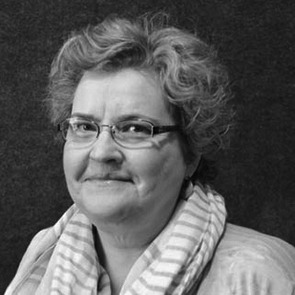

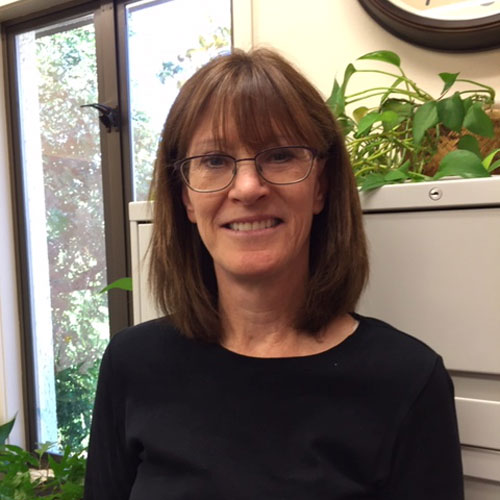
Poems about food from Wendy Hoffman, Christine Higgins, and Fran Markover.
TRANSCRIPT
September 25 is National Cooking Day. According to the source I read, National Cooking Day “was created to encourage people to spend more time in the kitchen and to appreciate the art of cooking.” Spending more time in the kitchen isn’t everybody’s idea of a good time, but hey… Apparently, the exact origins of the day are unclear, but “it has been celebrated for many years as a way to promote healthy eating, family bonding, and cultural heritage.”
So let’s spend the next few minutes thinking about food.
Wendy Hoffman said, “I lived in Victoria, BC for a while with English and Scottish friends. They cooked orange marmalade in a large brass pot, the kind that’s hardly made anymore. After trying days, I would return to my suite and spread this homemade preserve with clumps of peel on warm spelt bread.” She said, “As soon as I have a gas stove, I will cook it, too.” Here’s Wendy’s poem “Marmalade.”
Old maids, widows, the disgruntled
need this cheerful, slithering preserve.
More peel the better.
Pulp finds a secret channel to luxuriate in,
behind the central throat, slightly
to the left, above compartments
in the deflated heart, below the amygdala.
Yes, he left you – Yes, he died,
Stood you up, maybe at the altar –
Yes, the boss patronizes,
You didn’t get the promotion –
nothing the serpentine
drizzling of the bitter
sweet orange can’t minimize.
Sugar lifts cheekbones,
its smoothness,
the pulse.
All the slivers of rind
sing to hoist your solar plexus.
From Passager Issue 70, the Winter 2021 issue, “Marmalade” by Wendy Hoffman.
It’s nice when we can think about the food we’re preparing and eating. But sometimes, that same food doesn’t seem important at all. Here’s an example, part one of Christine Higgins’s poem “What Shelter, What Hope?—ER Visit, Thanksgiving” from Passager’s 2015 Poetry Contest issue.
We bring our child to the ER.
They put her in a disposable hospital top and pants.
They want to take her bra, but she won’t give it.
They want her earrings and her watch, as if
she’s going away for a while. She is so anxious
she’s biting the sleeve of the top, a material
that resembles a coated tablecloth.
We are here because she kept saying she
wanted to kill herself, no back-pedaling.
They take her backpack and her cigarettes.
They ask about marijuana use, and she says
4x, no maybe 5x a week. Her friend is outside,
but I won’t let him come in, afraid that later
she will regret all of this and the scene
she is making with nothing to soothe her.
Four hours later, her father asks
how much longer and can she have something
for her anxiety, which is now through the roof.
The nurse looks at her with disdain,
tired of hearing my daughter curse,
blubber, and beg to be taken home.
I’m okay, I didn’t mean it, I didn’t know
what I was saying, I just want to go home.
I wonder what white coat is going to fix this,
what bright personage here on this holiday
is going to sweep in and tell me:
here’s what’s happening to your teenager
and here’s what we need to do.
We return home to cold mashed potatoes.
We eat rolls with butter
and chilled cranberry jelly.
Later, I lie down in her bed with her,
the child I delivered into this world.
“What Shelter, What Hope?—ER Visit, Thanksgiving,” Christine Higgins. Christine said, “The death of my daughter at age sixteen is now part of my writing life. Grief can be stultifying. As difficult as it is to grapple with this subject matter, I find it’s better for me to keep writing about it, to keep trying to make something new.”
Sometimes we fix food for nourishment or company or just because we like to eat it. Sometimes, it seems like we have a unique relationship with the food or its ingredients. Here’s Fran Markover, writing about her grandmother making “Stew.”
How she spoke to the vegetables, soften up,
already or take your time, usually in Yiddish.
Maybe she was thinking about the garden
and how the pungent earth sifted through
her calloused fingers. Sometimes, I heard
cries to the chicken roosting in thick liquid.
Question & response as if she were in shul.
The rabbi intoning his queries, congregants
nodding amen. Grandmother asking the bird
what’s missing—salt, chives, a bissel celery?
Sometimes, steam would moisten her face.
It wasn’t the onion commiserating or broth
on lowest flame, but something bone-deep,
green as kale that led her to whisper only in
dreams are carrots as big as bears, or mayn
cabbage, help me, Got in himmel, my God
in heaven, help me remember—how much
sour or sweet, how much longer for each
layer to boil down, simmer, tender as flesh.
Fran Markover’s poem “Stew” from Passager Issue 59, reprinted in her book Grandfather’s Mandolin.
To buy Grandfather’s Mandolin, subscribe to or learn more about Passager and its commitment to writers over 50, go to passagerbooks.com. Passager offers a 25% discount on the books and journal issues featured here on Burning Bright. Visit our website to see what’s on sale this week.
You can download Burning Bright from Spotify, Apple and Google Podcasts and various other podcast apps.
To subscribe to, donate to, or learn more about Passager and its commitment to older writers, visit passagerbooks.com.
For Christine, Rosanne, Mary, Asher, and the rest of the Passager staff, I’m Jon Shorr.
Due to the limitations of online publishing, poems may not appear in their original formatting.